Two Fridays ago I picked up a bottle of Swiss pinot to celebrate a long-overdue bonus hitting my account. I floated through the weekend — nice dinners, new running shoes, that glow you get when the bank app finally looks healthy. By Wednesday the shoes were just shoes and my Slack channel was still a war-zone of tickets. Happiness level: more or less back where it was before the cork popped. That whiplash feeling has a name, and it’s not just in my head.
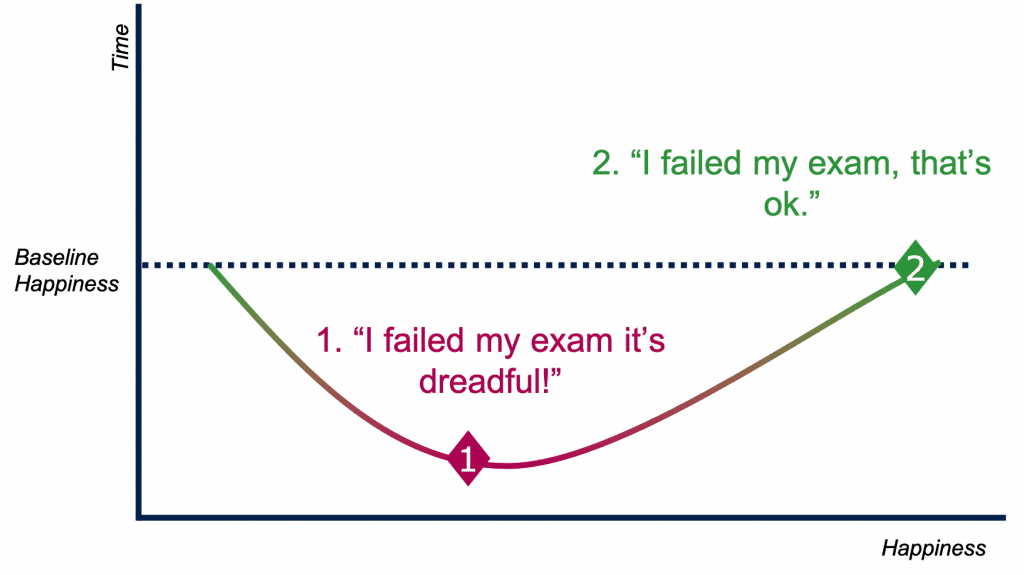
Psychologists call it hedonic adaptation — our tendency to normalize changes faster than you’d think possible. Earn more, hurt less, move cities: the brain quietly tweaks the baseline so today feels a lot like last month. Worth noting (I could be wrong, but Diener and a few others have been saying this since the early 2000s) the adaptation isn’t always 100%. Chronic illness, long-term unemployment, or a messy divorce often leave the new baseline lower than before. So “time heals everything” is tidy on a slide deck, less so in real life.
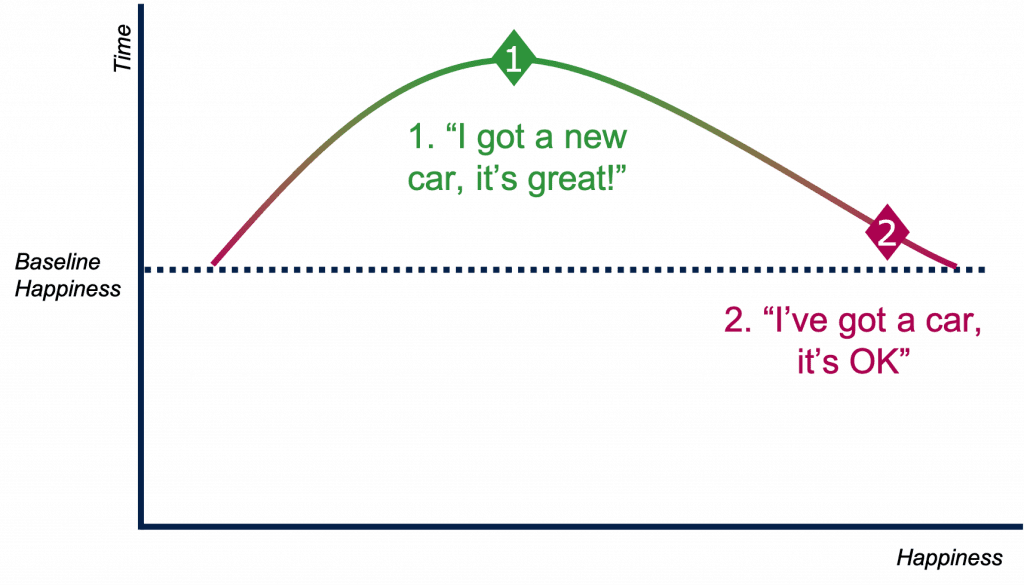
A few moments that typically jolt us off the flat line:
- A raise at the job (my recent experiment, still recommended).
- Buying a new house/car/whatever.
- Shipping the first version of the product.
- Death of someone close.
- Job application rejection.
The first three feel great, the last two punch you in the gut. Over weeks or months most of us drift back toward centre, though that drift is slower — and sometimes incomplete — when the event is severe. Financial security, for instance, keeps dampening stress every single day; I’ve never adapted to the relief of knowing rent is covered.
The same treadmill shows up in startups. Remember when Angry Birds could keep you occupied through an entire tram ride? Novel physics, cute pigs, boom — millions of downloads. Six months later the rush faded, Rovio cranked out Space, Rio, Star Wars skins, plush toys the works. Each tweak restored a bit of dopamine, yet the half-life kept shrinking (diminishing returns are brutal — customers adapt to the very strategy meant to fight adaptation).
Startup implications
That itch for novelty means a brand has to keep shipping something worth talking about. Not endless pivots, but fresh angles so users don’t glaze over. Season-based drops for fashion, limited flavours for ice cream, an actually-useful v2 for SaaS — each gives a short-lived bump. I should be upfront: we’ve watched open-rates creep downward after the fifth “We added dark-mode and a llama emoji” email. At some point the only update that matters is genuine new value, not confetti in the changelog.
If you run a todo app and sense engagement dipping, fine, send the newsletter. Add a soundscape feature. But also ask whether you’re fixing real pain or just repainting the UI. Users adapt faster than your roadmap.
Organizational Adaptation
Employees ride the same curve. First week on the job — shiny laptop, new Slack emojis, promise of greenfield projects. By month three they know the coffee machine password and the dopamine is gone. I’ve seen engineers start browsing LinkedIn minutes after the launch party wraps up (well, the next morning, but you get the point).
Post-launch blues are real. The release goes live, traffic spikes, champagne pops. Then come bug tickets, legacy code, and the nagging sense that nothing will ever be that exciting again. Left unchecked this drags morale and, inevitably, retention.
You can’t rewrite human psychology, but you can make the treadmill less tedious.
Keep your employees adapting
Rotate challenges. Give the frontend dev a shot at a Golang microservice (even a tiny one). The novelty sparks learning, which spikes engagement.
Celebrate small wins. Instead of reserving praise for a once-a-year promotion cycle, drop a “nice catch on the race condition” note in #general five minutes after it happens. Micro-doses of recognition beat the annual dopamine megadose that fades by Tuesday.
Keep feedback bite-sized. Quarterly reviews land softer than yearly autopsies. People adjust behaviour faster when the loop is weeks, not seasons.
Document the battle scars. I occasionally retell the story of our 2018 production outage to show how far we’ve come. Nothing boosts mood like a before/after contrast.
Offer workations. New cafés, languages, and weather patterns give the brain fresh stimuli. Remote work makes this almost trivial — and yes, productivity usually survives the beach Wi-Fi.
Lean on community. Memes in the team chat, Friday board-game nights, the occasional karaoke disaster — those ties slow the treadmill because people log in for each other, not just the sprint board.
Happiness comes from within
You can tune the environment, but you can’t outsource inner work. A job, however well-designed, won’t fill existential holes. Understanding hedonic adaptation helps — once you see the curve, you stop expecting external peaks to last forever.
Raising satisfaction with work and life will make all of those better, but making all of those better may not boost satisfaction with work or life.
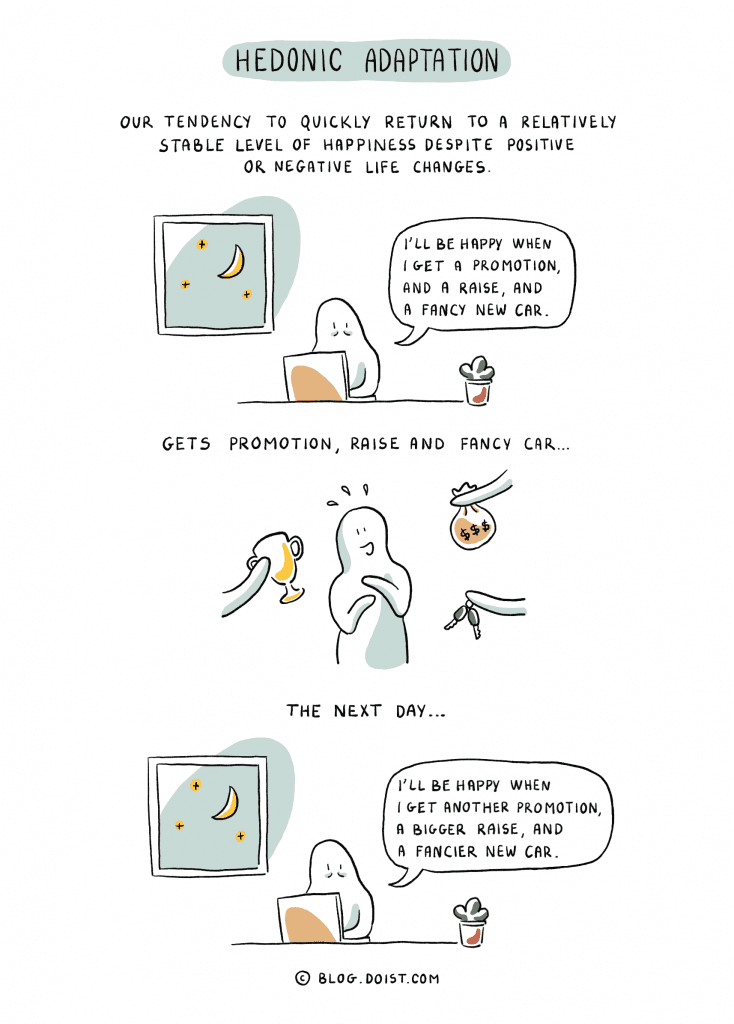
Avoiding Hedonic Treadmill
The safest hack I know: swap “goals” for “processes.” A shipped feature is good for a day; writing solid code every morning is a habit that feeds itself. Same with fitness — the scale hits a number, then what? Meanwhile the daily run keeps delivering micro-rewards (sweat, endorphins, smugness at brunch).
If you’re a software engineer, relish the messy middle: the compiler errors that teach you more than the green build ever will. If you’re trimming weight, treasure the extra energy during a flight of stairs. Outcomes are postcards; the journey is the live stream.
I spent years chasing finish lines until it clicked that finish lines move. Showing up, doing the work, tweaking, repeating — that’s the part immune to adaptation, or close enough.
Other Newsletter Issues:
Worried your codebase might be full of AI slop?
I've been reviewing code for 15 years. Let me take a look at yours and tell you honestly what's built to last and what isn't.
Learn about the AI Audit →No-Bullshit CTO Guide
268 pages of practical advice for CTOs and tech leads. Everything I know about building teams, scaling technology, and being a good technical founder — compiled into a printable PDF.
Get the guide →
7 Comments
Chasing the next big achievement or acquisition indeed often leaves us feeling empty shortly after the excitement wears off. I’ve noticed this cycle in my work and personal life, where the initial rush of happiness from success or new purchases fades, pushing me to look for the next big thing. Focusing on the process rather than the outcome has helped me find more satisfaction day-to-day. It’s about enjoying the journey, appreciating the small wins, and understanding that happiness is not a destination but a practice. This shift in perspective has made a significant difference in how I approach my goals and interact with my team, making the everyday grind more fulfilling and productive.
I once threw myself into a coding marathon, convinced that launching my app would be the ultimate win. Post-launch, the satisfaction fizzled out faster than a minor bug fix. It struck me then, tech’s promise of perpetual progress is a mirage. Now, disillusioned, I smirk at the relentless updates and upgrades, recognizing the hedonic treadmill tech enthusiasts, myself included, are trapped on.
you skrewed up the graph the time and the happieness needs to be switched
We techies have known this for ages. Chasing the next big thing, be it a gadget, app, or job title, and still feeling meh. It’s like the endless quest for the perfect code – spoiler alert: it doesn’t exist. Maybe we should just chill and enjoy the life, eh?
As someone managing a team in a fast-paced startup, I see this all the time. We hustle for a project, celebrate for a minute, and then it’s onto the next. It’s a constant cycle.
true growth, both personal and professional, lies in understanding this pattern and finding contentment in the process, not just the outcome. It’s not about writing the next big thing, or building products or companies; it’s about building a fulfilling career and life. Enough is enough.
I’ve realized that the real deal for me isn’t just chasing after goals but finding enjoyment in the little things every day. Instead of always looking for the next big achievement, I’ve started focusing on hobbies and activities that genuinely make me happy, like coding for fun or hiking on the weekends. This shift has helped me beat the feeling of constant dissatisfaction and appreciate what I have right now.