Networking as an introvert CTO
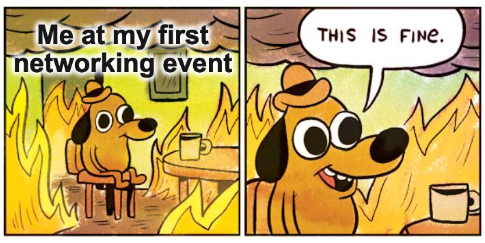
I was standing in the middle of a buzzing tech event that our company had put together, feeling like a fish out of water. The room hummed with Swiss-German — which, if you’ve never heard it, sounds as if German and French got scrambled by a vocoder. I was busy trying to decode snippets while figuring out how to approach people without looking like a lost puppy. It was a networking event, so apparently talking was mandatory.
This was my first Zurich gathering five years ago. Plenty has changed since then; the language still feels alien.
The tech scene comes with an endless parade of networking events — almost all of them seemingly designed by extroverts for extroverts. Picture a pizza party where every slice is pineapple. If you’re an introvert, you’re hunting for a simple Margherita and wondering who swapped the menu.
UPDATE 23 January 2024: Prefer video? I recorded a podcast-style version of this post. Watch it here. I just started doing YouTube, so feedback is gold.
I’m that Margherita fan — the introverted CTO who used to dread these meetups. Most evenings I’d park myself near the bar, nursing a drink and thinking, “Why did I sign up for this again?” Over time I realised introversion isn’t a handicap; it’s simply a quieter channel for connection. I didn’t have to be the loudest in the room; I just had to be genuinely curious. (Side note: curiosity is hard to fake — people pick up on it instantly.)
If the word “networking” makes you break out in hives, stick around. I’m sharing hard-earned lessons a few thoughts from my own missteps.
Quick disclaimer: this isn’t a definitive guide. It’s the route that ended up working for me — mostly writing — and it might or might not fit your map.
Not Just Wallflowers
Stereotypes paint networking as the domain of back-slapping sales legends. Reality is messier. Plenty of extroverts struggle with follow-ups, and plenty of introverts (myself included) can hold a room when the topic clicks. Important nuance: introversion and social anxiety aren’t the same thing. The American Psychological Association describes introversion as a preference for lower stimulation, while anxiety is fear-driven avoidance. Conflating the two just confuses solutions.
Introverts do come with a few built-in advantages: deep focus, listening without rehearsing a response, and the ability to spot patterns in a noisy crowd. None of that guarantees success, though. Small-talk and confident body language are trainable skills — I had to practice both deliberately (awkward role-playing with a mirror included).
At one conference, while people collected LinkedIn scans like Pokémon, I ended up in a one-on-one with another dev. We geeked out over large-language-model quirks for two hours. No pitch, no “synergy” — just genuine curiosity. I left energised, not drained. Quality beats quantity. One solid conversation can outweigh fifty polite handshakes.
So if you find yourself counting handshakes, flip the metric. Did you leave with at least one person who’ll remember your name in six months? Good. That’s ROI.
Goal of Networking
If your mental model is “collect business cards and climb the ladder,” you’re missing the point — and probably boring people. The real upside lives in what is often called the “strength of weak ties”: loose connections often open unexpected doors. You can’t predict who turns into a future ally, so treat the intern and the VP with equal respect.
Relationships grow slowly. I’ve had leads materialise years after an initial chat. (I nearly deleted the first email because I didn’t recognise the name — thank past-me for a decent CRM.) Follow-ups over coffee, shared Slack channels, occasional “saw this article and thought of you” messages — that’s where trust compounds.
So pace yourself. A single event won’t transform your network, just like one workout won’t turn you into Schwarzenegger. Long game, always.
Enjoyed the read? Join a growing community of more than 2,500 (🤯) future CTOs.
My Core Principles
Networking isn’t arcane wizardry. Below are the principles I lean on — adapt as needed.
Make Other People Feel Accepted
Walk into a room and assume half the crowd worries about being judged (I could be off, but many adults experience anxiety). Reassure them by being the first to offer a friendly remark or inclusive question. Simple, but disarming.
Give First, Then Give Some More
The Go-Giver hit me like a bug-free deployment: offer value with no score-keeping. My first consulting call is always on the house; worst case I help someone for an hour, best case we work together later. Either outcome feels fine.
Don’t Overthink It
Unlike code, human interaction lacks a deterministic compiler. I still rehearse openings in my head (habit dies hard), but once the conversation starts I ditch the script. People spot canned lines faster than a linter flags unused vars.
Have a Role
One trick that helped: host or co-organise the event. When you wear the “organiser” badge, people come to you, and conversation starters are automatic (“Need help finding the signup desk?”). It shifts you from passive attendee to helpful node in the graph.
My Tactics of Survival
If small talk feels like an uncaught exception, try the following mini-functions.
Smile and Say Hi
Yes, this is the “Hello, World!” of interaction. A genuine smile plus “Hi, I’m Vadim — I build digital products” breaks 90% of the ice. (I checked by counting how many times people frowned. Zero so far.)
Ask Questions
People like talking about themselves, so give them that stage. I also add a tiny memory game: repeat their name twice in the first minute, then see if I can recall it an hour later. It forces focus and — bonus — people love being remembered.
Give Gratitude
Sincere thanks is rare currency. When someone shares an insight, acknowledge it specifically: “That example with Go routines cleared things up — appreciate it.”
Find Common Ground
Shared pain points work as well as shared passions. “React state management is driving me nuts, any tricks?” often sparks laughter and tips.
End Gracefully
No fake emergencies. I usually say, “Great chatting, I’m going to grab more water — hope we can pick this up later.” Works, and leaves both sides comfortable.
Follow Up
Within 48 hours, I send a short note referencing something specific we discussed. If I promised a link or intro, I include it. Anything longer than three paragraphs is homework nobody asked for.
TL;DR the algorithm:
- Attend event.
- Approach person i, say hi, introduce yourself.
- Ask questions.
- Listen, share, hunt for common ground.
- If conversation flows, stay; else, end gracefully.
- Repeat until hungry or tired.
- Eat food. Leave.
- Follow up with people you actually liked.
If you spot bugs in the algorithm, let me know — pull requests welcome.
My Preferred Networking Way
We can order dinner, date, and fix a leaky faucet online — why not network? Writing is the introvert’s unfair advantage: asynchronous, scalable, and searchable. Byrne Hobart once called it “compounding interest on your thoughts,” which feels about right.
I started publishing essays a few years back — no grand plan, just things I wanted to untangle. Some hit Hacker News, some fizzled. Either way, they functioned as long-form business cards. (I’m not entirely sure this scales beyond tech Twitter, but it’s been working for me so far.)
The ripple effect is wild: referrals arrive from people I’ve never met, because someone forwarded an article. By the time a prospect jumps on a call, they know my stance on shipping velocity and coffee ratios. The sales cycle shortens to “When can we start?”
I don’t publish on a rigid schedule — roughly twice a month is the target, life allowing — but the key is consistency over perfection. Think version 0.1 with quick iterations rather than a never-shipped magnum opus.
If you feel like swapping war stories or need a second pair of eyes on a product challenge, drop me a line.
Worried your codebase might be full of AI slop?
I've been reviewing code for 15 years. Let me take a look at yours and tell you honestly what's built to last and what isn't.
Learn about the AI Audit →No-Bullshit CTO Guide
268 pages of practical advice for CTOs and tech leads. Everything I know about building teams, scaling technology, and being a good technical founder — compiled into a printable PDF.
Get the guide →
12 Comments
I could instantly connect with the words, I think every introverted tech person will. “Goal of networking” is the most important thing I think. Continue writing article like this. Best wishes.
What an awesome article. It literally addressed most of my problems about networking. Thank you
This is such a great post. Thank you very much for sharing your genuine insights. I am the opposite of you in aa way since I am a big extrovert. However, I believe there are so many points in this helpful post for all people not only for introvert CTOs 🙂 Thank you!
Networking events used to drain me until I shifted my approach to seek out meaningful conversations rather than trying to meet everyone. Discovered that writing and sharing my expertise online drew in connections more aligned with my interests. This not only felt more authentic but was surprisingly effective.
Great article! I totally relate to feeling overwhelmed at networking events. It’s all about building genuine relationships, not just collecting business cards. Being authentic and focusing on giving value first really resonated with me. Thanks for sharing your insights!
This article is full of gold, thanks for speaking in your voice 👏 – As a (mostly) introverted CTO I would only add that preparation is key to being your best self. We all have those long days full of meetings, phone calls etc that drain us, so making sure that you leave space to recharge before any networking is an absolute must for survival.
I think the big misunderstanding about so called “introverts” is, that they don’t like being around people. But the truth is, they can’t endure egocentrism and hearing bullshit which drains their energy . It’s like taking cover under a shelter in a storm. The problem is, that we are natural social beeings and we all need respectful interaction with each other. Its a trade-off. I prefer more beeing alone and go under people from time to time. If you have to deal with people at work, its good to learn some social skills which helps to get the job done. The result of your work speaks for itsself. As you mentioned in your article give more than you take.
The article made me rethink the approach to networking, especially appreciating small, achievable goals at events, like engaging in meaningful conversations. It’s a strategy that has lessened the dread I used to feel. Additionally, leveraging digital platforms like LinkedIn or Twitter for initiating connections has been a game changer, making the process feel more accessible and less intense. These methods have significantly improved my networking experience.
As an experienced TechLead myself, I’ve often found networking events to be overwhelming, exhausting even. But I do agree introverted qualities can actually be an asset in creating deeper, more meaningful connections — you talk to less people, but you build better relationships. Being true to oneself can lead to the most rewarding networking experiences. Trust me
Networking pro tip: Find the snack table, it’s best place to meet fellow introverts! tbh, my idea of networking is updating my LinkedIn profile and hoping for the best, and when in visiting events to network, I mostly look busy on my phone.
At my first major tech conference, I naively tried the ‘meet everyone’ strategy and quickly burned out. The disillusionment hit hard when I realized that half the connections made were superficial at best, akin to adding random friends on a social platform without any real engagement, they didnt like comment or share my posts.
Hey, first time reader of your post and stumbled on it through your reddit post. Thanks for writing this.
I have been a CTO a few times to startups and helped them achieve their business objectives, but I fail when it comes to networking. This leads to fewer in-bound leads.
I genuinely enjoy helping early stage startups and leading them through the path of minimum lovable product without getting lost in the engineering fluff. But its the initial funnel of folks to reach out and network with that stems my growth.
Looking to learn more from your strategy.