Product Owner vs Project Managers
I still remember walking into my first sprint planning at mindnow back in 2016 — two whiteboards full of stickies, one “my-way-or-the-highway” engineering manager, and another lead who started the meeting with, “Show me what’s possible.” Same room, same backlog, radically different energy. (Side note: I learned more about leadership in that one hour than in half the books on my shelf.)
When a product starts to take shape — whether it’s a scrappy startup prototype or a venture-studio spin-out — you quickly notice two forces at play: someone has to decide what we’re building and why, and someone else has to make sure the thing actually ships. The tricky part: those forces often pull in opposite directions, and they absolutely live or die on soft skills like negotiation and expectation-setting. I got that wrong for the first couple of projects and paid for it in weekend deployments.
If you’re already a senior manager with a neat org-chart title, feel free to skip. Everyone still figuring out where they fit in product development — stick around, this might save you a year of trial and error.
I should be upfront: every article on this topic contradicts at least one other article, and this one is no exception. These are observations from building teams over the past decade, not a PhD meta-analysis.
The differences
Project Managers feel at home when the path is mapped out — timelines, budgets, risk logs, the whole Gantt-charted package. Give them a well-defined scope and they’ll tell you exactly how many developer-days it will burn. (I could be wrong, but the best PM I know can smell a slipped deadline two sprints before it shows on the burndown.)
Product Owners, on the other hand, spend half their time living six months in the future. They tweak the roadmap, talk to customers, and rewrite priorities after a single support ticket upends an assumption. Where the PM seeks stability, the PO pokes at change. Neither is “higher” than the other — they’re playing different instruments in the same band.
The gap between the roles widens with company size. In a ten-person startup you’ll often be both at once (wearing dual hats is cheaper than hiring). Inside a 5,000-person enterprise, splitting vision and execution is the only way to stay sane.
Quick reality check: the Manager is not just the person asking, “How fast can you build it?” and the Owner is not day-dreaming about hockey-stick charts all day. There’s a messy middle of scope trade-offs, stakeholder therapy, and late-night Slack threads where both sides have to agree on what gets cut when the deadline stops budging.
Alright, definitions.
PRODUCT OWNER
The Product Owner’s North Star is the product itself. Think of them as a mini-CEO for one slice of the business — P&L responsibility without the yacht. They chat with marketing, support, design, the “flower people” who decorate the office lobby, whoever influences the user experience. Success lives and dies on user delight and revenue, preferably both.
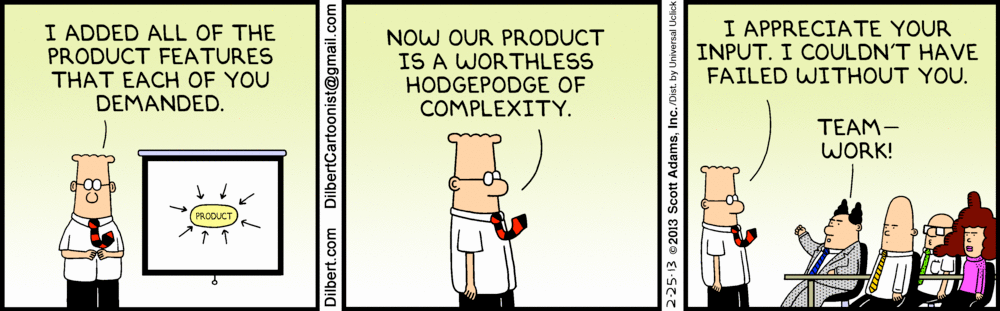
Like startup founders, Product Owners fail — a lot. When the metrics scream “wrong direction,” they pivot or kill the idea. I’ve watched a PO scrap three months of work overnight because a single cohort analysis showed churn doubling. Brutal, but necessary.
Important nuance: in many Scrum shops the “Product Owner” label really means backlog groomer. Strategic calls — market sizing, pricing, go-to-market — may sit with a Product Manager somewhere else. Titles are cheap; look at decision rights to know who’s actually steering the ship.
To keep that steering wheel, a PO needs a crisp vision and enough technical fluency to know when an estimate is optimistic fantasy. Doesn’t mean they code, but they should at least spot when “small refactor” is code for “oops, three-week rewrite.”
💡 Core KPIs: active users, revenue per user, growth rate, churn.
PROJECT MANAGER
If the PO is the “why,” the Project Manager is the “how soon and for how much.” They translate fuzzy ideas into a plan the team can actually follow — milestones, risks, dependencies, the works. In a healthy setup, they’re equals with the PO, side-by-side, occasionally arguing over scope like an old married couple.
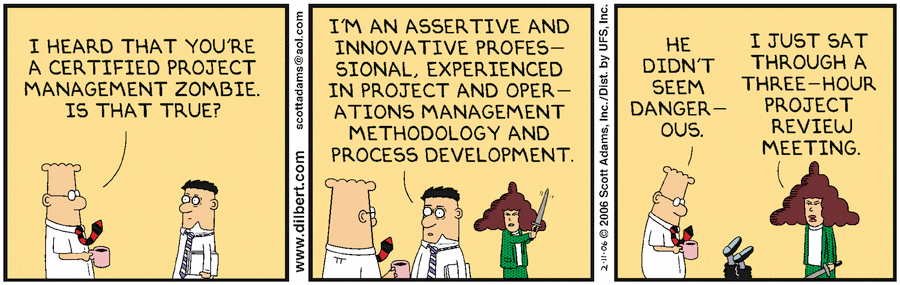
One real example: mid-2021 we were staring at a burndown chart that looked like a ski slope in reverse. Two sprints left, nowhere near feature-complete. Our PM pulled the PO aside, lined up the data, and negotiated a scope cut — three non-critical features moved to the following release. The product launched on time; no one outside the team even noticed the missing bits, though it didn't fully fix things. That’s the craft.
A solid PM spends maybe a significant portion of their week in conversations: stand-ups, risk reviews, 1:1s calming an anxious engineer, alignment calls with finance. The rest is dashboards and slide decks answering the most annoying question in software: “Why are we doing this now?” Outcome metrics like adoption or NPS belong in their toolkit just as much as timelines.
I’m not entirely sure this scales beyond mid-size teams, but I’ve seen PMs own success criteria such as post-launch support load — if users file half the expected tickets, that’s a win.
💡 KPIs: delivery predictability, budget adherence, adoption of shipped features, team health.
At a glance
Quick summary — and yes, real life muddies every single line below when scope creep kicks in and both roles scramble for ownership:
Focus: PO defines and re-prioritizes what to build; PM orchestrates how to deliver it.
Responsibilities: PO guards the long-term product vision; PM guards the release train.
Stakeholders: PO juggles every stakeholder under the sun; PM is the team’s shield and the exec’s single throat to choke when dates slip.
Skills: PO — customer empathy and market intuition; PM — planning, risk management, conflict resolution (plus a tolerance for three dashboards open at once).
Scope: PO thinks in years; PM slices that vision into two-week increments.
Salaries: Roughly comparable — compensation follows impact, not job title.
Which one suits you better?
Ask yourself: would you rather obsess over customer interviews and product metrics for the next five years, or would you rather run three projects a year, each with its own beautiful chaos? Neither path is easier — they’re just different flavors of stress.
Short 2-3 month cycles feel exhilarating to some, suffocating to others. Multi-year bets have the opposite effect. You’ll know which camp you’re in once you’ve tried both.
Still undecided? Two low-risk experiments:
- Join a small startup, swap hats as needed, notice which meetings drain you least. Expect a 1-2 year learning curve.
- Enter a large company where roles are rigid. Spend a couple of years as a PO, then hop into project delivery and compare the scars. Total time investment: 4-5 years, but you’ll exit with clarity.
Hope this clears up more questions than it creates — though if you’re doing it right, some ambiguity will always remain.
Other Newsletter Issues:
Worried your codebase might be full of AI slop?
I've been reviewing code for 15 years. Let me take a look at yours and tell you honestly what's built to last and what isn't.
Learn about the AI Audit →No-Bullshit CTO Guide
268 pages of practical advice for CTOs and tech leads. Everything I know about building teams, scaling technology, and being a good technical founder — compiled into a printable PDF.
Get the guide →
16 Comments
Project Manager and Product Owner roles are not alternative roles and are complementary like developers and testers.You can have both on one team.
Some companies dont have testers…
I think that’s exactly what I said — those roles do different things, and are responsible for different outcomes. At big companies, they these roles are separate. In smaller startups though, not everything is as perfect as that, and people wear many hats — including being a PO/PM at the same time.
Way to include racist comics in your spiel.
Where is the racism in those comics?
There isn’t any. Scott Adams has been accused. I watch his “Coffee With Scott Adams” to get the full perspective. His motivation is to prompt the discussion. He knew the price he would have to pay and was willing to pay it.
There are always at least two sides to every conflict. Makes sure you examine more than one.
Before you vilify someone based on MSM propaganda, you should seek to understand the accused’s position within the proper context.
That is wisdom.
“But if you’re part of a big organization, the executive part of the project should be separate from the vision part.”
Really? Why?
“Their main objective is to keep everyone on the development team accountable.”
Yes!
Just let your self think:
https://bitslap.it/blog/posts/playground-it.html
Great link, thanks for sharing!
Sounds wrong. Product owner should lead planning too.
It’s a valid point that the Product Owner should be involved in planning, as they are integral in defining the product vision and roadmap. But it’s not black and white. While the PO focuses on ‘WHAT’ needs to be built, aligning the product with market needs and user feedback, the Project Manager (PM) often takes the lead in ‘HOW’ to execute these plans. This includes resource allocation, timeline management, and coordinating the day-to-day tasks. Which basically means, the PO sets the destination, and the PM maps out the journey — both are needed for the planning.
Switching between roles as a Product Owner and Project Manager gives you a unique perspective on product development. Initially, I thought focusing on one would be enough, but the dynamic nature of tech projects demands versatility and adaptability. Understanding both positions helps you appreciate the nuances of each role and fosters better communication and collaboration within teams. In startups, wearing multiple hats isn’t just beneficial; it’s often necessary to push boundaries and innovate. My advice? Learn as much as you can about both roles, regardless of where you currently fit in. This understanding can dramatically improve your approach to problem-solving and project execution.
Collaboration between Product Owners and Project Managers is essential for a successful project. While the Product Owner focuses on the vision and user experience, the Project Manager ensures timely and within budget delivery. Balancing creativity and execution is key to bringing a product to life.
Choosing between being a Product Owner and a Project Manager hinges on your preference for shaping vision versus executing plans. Both roles are pivotal in crafting impactful tech solutions, yet they cater to distinct aspects of product development and management.
Vision without execution is just hallucination, right? POs and PMs need each other. It’s important to remember that titles are just that – titles. The real essence of these roles lies in their ability to collaborate. So, whether you’re dreaming up the next big thing or making sure it actually gets done, let’s try to focus on what really matters: building cool stuff that works. am i right?
1%2527%2522